Something a bit different for this post . . . a story I recently wrote and would like to share.
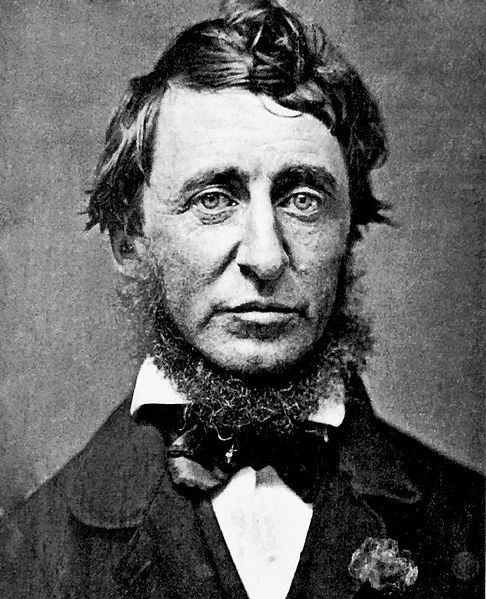
We were recently introduced to the writings of Henry David Thoreau and have discovered that this 19th century American philosopher had views on life similar to our own. He withdrew for a time into the forests of Massachusetts (USA) and built a cabin by Walden Pond to live a simple, self-sufficient lifestyle in harmony with nature. We have quoted him here as his insights are as relevant today as they were in 1854. Our experience parallels Thoreau’s in that we have moved from the city to the bush not far from a small country town, and we are owner/building an energy efficient house and establishing a food garden to feed ourselves. Thoreau outlined his reasons for the move as follows:
I went to the woods because I wanted to live deliberately, to front only the essential facts of life, and see if I could not learn what it had to teach, and not, when I came to die, discover that I had not lived. I did not wish to live what was not life, living is so dear, nor did I wish to practice resignation, unless it was quite necessary (Thoreau 1854, p182).
About six years ago we started to feel discontented with life. Something was not right. I had a permanent career earning plenty of money, working five days a week, Bryon was working hard on renovating the house and establishing our garden, we had a comfortable home and good relationship and family life. So what was the problem? The work was very stressful; there was never enough time to do the things we really wanted to do. Everywhere we looked there seemed to be controls, rules and regulations, exhaust fumes, junk food, advertising, and empty entertainment; there was a lack of connection between people.
In the movie The Matrix the machines create an artificial intelligence that creates the illusion of freedom but in reality imprisons people within the economic system. In the movie, Neo (played by Keanu Reeves), unplugs from the matrix and sees how things really are and we can identify with that. We had been captive to the system and are now free and living outside the system as much as we are able. We had been disconnected from people…in our society we know what Justin Bieber had for breakfast but we do not know the name of the elderly lady living next door.
We increasingly realised that we were disconnected from how animals suffer to provide our food and the destruction, both human and environmental, that our consumer lifestyles cause. Ever expanding consumption on a finite planet cannot be maintained and economics based on growth must eventually reach the limits of growth. We were becoming increasingly frustrated that our politicians could not see what surely must be self evident truths.
More and more events seemed to add to our frustration. A huge multi-million dollar company wanted to build a quarry right next to our community and it seemed no one would listen to our concerns, we installed solar panels then the power company cut back the rebates, our insurance premiums kept going up and up and we had never had a claim, what was going on?
The government seemed to constantly set up new ways to take our money. Water and sewerage companies were introduced to take that responsibility away from local government but in turn local government did not reduce their rates, it was just another money grab. We heard about plans to tax water tanks because they were taking water from the catchment, what would be next?
We realised more and more that we were working four days a week for the “system” and one day a week for ourselves. Our interest payments on the mortgage were $1000 per month. We had given the bank $48,000 interest in four years compared to our new house only costing $29,000 total to lock up stage, it still concerns us that we could have made this shift to freedom years ago. After the mortgage there was parking, fuel, car payments, insurance, tax, GST, and rates and on and on. We now have an annual budget of $3,700 which covers all remaining fixed costs. Then we just have to have enough money for fuel, for the food that we can’t grow and lifestyle expenses. Currently we find an income of $20,000 per annum is enough to sustain a comfortable lifestyle for us both. Thoreau looked at the cost of things by equating it to how much of his life had to be devoted to attaining that thing:
…and the cost of a thing is the amount of what I will call life which is exchanged for it, immediately or in the long run (Thoreau 1854, p135).
In his day you had to devote 15 years of your working life to purchase an $800 house and this exchange was unacceptable to him so he built his own cabin in the woods for $28, thus freeing his life for other pursuits. What a refreshing way to see this most important exchange, probably the biggest transaction most people make other than investing in superannuation (sometimes just to see it go backwards).
Our critics voice the message from The Matrix, “you can’t disconnect, you must comply, you must work til you are 70” and pay to keep the bloated bureaucracy afloat and contribute to the salaries of executives and the profits of corporations. They are expressing their fears. Thoreau had some strong feelings around what he would accept from government and at what level he would engage with it. He reminds us that we do have a choice:
The authority of government, even such as I am willing to submit to…is still an impure one: to be strictly just, it must have the sanction and consent of the governed. It can have no pure right over my person and property but what I concede to it (Thoreau 1854, p110).
We now choose not to participate as far as we are able; we do not give these mechanisms any of our energy and as little money as we can. Thoreau declared war on the state and ended up in gaol for a night for not paying his taxes. He was prepared to pay tax for infrastructure and supporting society but he objected when he had to pay tax to fund a war against Mexico and to support slavery:
I quietly declare war with the state, after my fashion, though I will still make what use and get what advantage from her I can, as is usual in such cases (Thoreau 1854, p15).
So, to move away from this life and toward a more sustainable and simple one we decided to cash in the equity in our home and buy some land to build a small efficient cabin and grow our own food. Some of the principles we believe in are that a small local economy is more sustainable and resilient than huge global structures. Free trade agreements and globalisation have caused massive unemployment and upheaval for masses of people. Rather than continue with activism we decided the best way to change the future was by being the change (Ghandi).
We decided to go off-grid and have no telephone lines, no power, water or sewerage connections and importantly no debts or contracts for services. We are not a total luddites; we have a mobile phone and a wireless internet connection for checking mail and basic internet use. Thanks to globalisation and an economy managed to benefit corporations rather than people we need to have the internet to keep in touch with our beautiful children and grandchildren who have been flung far and wide in pursuit of employment and who are yet to see the benefits of disengaging from the matrix.
To get started we set up a shortlist for what type of land we wanted, access to water was number one. Next was location, somewhere not too close to civilisation. We needed a big enough piece of land to give space to process our own waste and grow enough food for ourselves.
Budget was also a consideration, the equity from the previous property had to buy the land and provide enough to buy the materials. We originally budgeted $40,000 to get the house to lock up stage, but 25% of that budget went on fees, charges, plans, waste management design, land management plan, special plumbing permits. We could go on but you get the idea, that bloated bureaucracy we wanted to escape had followed us to the bush!
Thoreau’s philosophy was similar to ours, in that he believed people spent so much of their life pursuing the dream, wanting a large house, fashionable clothes and a comfortable life. To get these things they worked long and hard when in reality they could have made do with so much less and had a lot of leisure time by living more simply.
When we first started to disengage we became vegetarian. We called ourselves meat-eating vegetarians in that we would eat meat if we were visiting friends and they served it to us. Then we became fully vegetarian over time as we came to realise it was inexpensive and healthier. The final step came when we watched the movie Earthlings (2005), we swore off animal protein on the spot (we have now been vegan for almost two years) and this helped to make the connection between our food and its source.
We grow most of our own food and eat seasonally, preserving fruit and making jams and relish for storing the excess production. We make sourdough bread and do not buy any processed foods. We find bulk buying the most economical way and currently go to town once a month for supplies, and we are hoping to reduce this in future as we become more established.
A key principle when designing our solar efficient house was to only build as big as we needed and efficiently use space. We looked at our previous home and realised that we only used the kitchen and dining room, there were two living rooms that we rarely entered. All our entertaining centred around food and the kitchen/dining so we designed a house that is basically a large kitchen/dining and living in one large room and a bedroom and en-suite. The house is only 97sqm but the main room is 12m long with a 3m ceiling so it feels very spacious. One bedroom is adequate otherwise the children may think they can move back home (take note you baby boomers).
The next major consideration after size was that it must be solar efficient and the design achieved an eight star energy rating so the house will heat and cool itself once the cladding and insulation is fully installed. The double glazing was not much more expensive than normal windows and we have not used any old growth timber and utilised recycled timber where we can. Hot water will be provided from excess solar and boosted by a combustion stove which will be lit twice a week for bread baking.
The decision to go down this path was not so much a conscious one, but one that evolved over time. It happened incrementally. The first act of disengagement was when we stopped junk mail from being delivered, next came no newspapers, and then out went the television. A visitor to the property recently asked us what we would do differently. Our answer was that we would probably buy some land a bit further from civilisation and just build a house without telling the authorities. Just quietly getting it done without the hassles and red tape and interference from government at all levels.
Even though we still have a long way to go and our income has dropped dramatically we are very happy. When we become too goal oriented we remind ourselves that the journey is as important as the destination. We have really engaged with the local community and feel a part of it and enjoy new discoveries and learn new things every day. It has been deeply satisfying to spend hours at night looking at the sky, and watching the seasons turn and the plants and creatures going through their cycles. If Henry Thoreau were alive today we feel we would be the best of friends, sitting by the pond in companionable silence, smiling.
References:
Earthlings 2005, [Documentary]. California USA, Nation Earth (Producer).
Ghandi, Mahatma. Quotation attributed to: “You must be the change you wish to see in the world”.
The Matrix 1999, [Movie]. California USA & Sydney Australia, Warner Bros. (Producer).
Thoreau, Henry David. Walden and Other Writings (1854). Krutch, Joseph Wood (Ed.) Bantam Classic, Random House, New York, 2004 edition.
 Banksia Hollow
Hi Bryon and Nev,
Robbie sent me your link, and I enjoyed your article very much. I’m the same, and hope you can visit me one day and see what I have been up to. I am jealous that you have been able to connect with your local community, as here, things are quite different. I gave up on the old locals years ago, as they have done their level best to ensure exclusion and negativity. I won’t bore you with the details. More recently I have had to give up on the so called “alternatives”, mainly new settlers, who are caught up in a quasi religious “green” doctrine which is also part of the Matrix, so that when right wing authoritarianism meets the “left wing” version, we will be distracted by it, instead of anyone in politics actually addressing the corruption and disfunction in every aspect of “the system”, especially science, medicine, history, agriculture, astronomy, economics, law and anything else that can be used for control of “the sheeple”. Unfortunately, when I bring any of these questions up, I am accused of conspiracy or negativity.
Do you vote? Do you believe in or patronise doctors? What about Anthropogenic global warming? The United Nations? Do these issues come up for you? Are people more openminded over there? I truly wonder if I should move!
I look forward to visiting you, and being further amazed at what you’ve done. You are very hard workers, walking your talk! Good on you!
Cheers!
Sandy